Celebrating the Life of Gladys LaFontaine Correa
GREATLY MISSED AND LONG CHERISHED
(1931 – 1977)
Gladys LaFontaine Correa
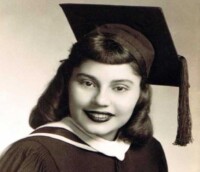
Gladys LaFontaine Correa was born in 1931 to Puerto Rican parents who arrived in New York City in the early 1920s. Raised in “El Barrio” (Spanish Harlem), she attended public schools in New York City for her entire education, including P.S. 101 Manhattan, Julia Richman High School (Country School Honor Program), and Hunter College (Honor School). With little fanfare but much admiration, the family took great pride in recognizing that she was the first individual in the LaFontaine family ever to attend college.
After a short period as a social worker, she began her teaching career in her own neighborhood at Dr. Luigi Galvani J.H.S. 83 Manhattan. Colleagues and supervisors were always impressed that in spite of her petite stature, she was a strict disciplinarian and yet the school’s most popular teacher with students. Perhaps prophetically, it was the beginning of her lifelong personal philosophy of meeting challenging standards through hard work while at the same time being compassionate and responsive to her students and others as distinctive individuals.
Gladys moved on to become a Spanish teacher at the High School of Commerce in the west side of Manhattan and in a few years was appointed Chairperson of the Foreign Language Department. During this time, she participated in the creation of the Puerto Rican Educators’ Association and then contributed toward the establishment of the first high school ASPIRA Club in the city.
In the 1960’s, as the national social climate changed dramatically, her energy and focus turned to civil, ethnic and community rights. Moving into the field of organizational and professional development, she conducted seminars and workshops in sensitivity training and human relations throughout the country. Called upon in many stressful community situations, Gladys had the unique ability of humorously invoking her diminutive stature to successfully relieve tension between conflicting parties.
Utilizing this considerable experience nearer home, she assisted in the establishment of Hostos Community College in the Bronx and later fulfilled a similar role at Boricua College in Manhattan. In spite of the debilitating effect of a chronic condition of lupus erythematosus she participated actively in the growing and controversial debate on bilingual education as it developed in the city, the state, and throughout the nation. She was involved in the initial efforts to create the National Association for Bilingual Education (NABE) in the 1970’s and also contributed to the early preparations for establishing the New York State Association for Bilingual Education (NYSABE).
During all of this time, Gladys continued in her inimitable loving manner to nurture and guide her only daughter, Diana Correa, through the beginning of her college years. It was a role she undertook for so many years and for so many people that it was not unusual for friends to visit her in the hospital to continue to seek her sympathetic advice and counseling. She was, indeed, the epitome of an intelligent and caring teacher who became an inspirational role model for her students. It was therefore no surprise that when she succumbed to cancer in 1977, at the early age of 46, the leadership of NYSABE chose Gladys Correa as the quintessential bilingual educator to be memorialized with the association’s annual award, the Gladys Correa Memorial Award.