
Celebrating the Life of Dr. Antonia Pantoja
GREATLY MISSED AND LONG CHERISHED
(1922 – 2002)
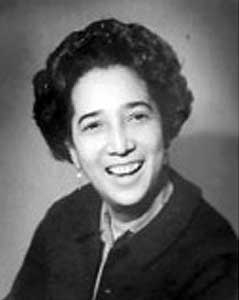 Dr. Antonia Pantoja
Antonia Pantoja, Ph.D., was an educator, social worker, feminist, and civil rights. She was the founder of ASPIRA, the Puerto Rican Forum, and Producir. Dr. Pantoja is the first Puerto Rican woman to receive the American Presidential Medal of Freedom.
Born in Puerto Rico, she moved to New York City in 1944. Like many Puerto Ricans emigrating to the United States during World War II, she found a job as a welder in a factory. With a profound interest in education, she applied to and won a scholarship to Hunter College, and eventually earned her Ph.D. in Social Work.
In 1957, Pantoja founded the Puerto Rican Forum, which served as an incubator for organizations and programs promoting economic self-sufficiency. In 1961, she founded ASPIRA (Spanish for aspire), a non-profit organization that promotes a positive self-image, commitment to community, and education. ASPIRA now has offices in six states, Puerto Rico, and its headquarters, the ASPIRA Association, is in Washington, D.C. It has provided approximately 50,000 Latino students with career and college counseling, financial aid, and other assistance, and is today one of the largest nonprofit agencies in the Latino community.
In 1964, Dr. Pantoja shifted her emphasis from self-help programs to the reformation of the educational system. In 1970, she established the Universidad Boricua, which is now known as Boricua College and the Puerto Rican Research Center in Washington, D.C. It has provided approximately 50,000 Latino students with career and college counseling, financial aid and other assistance, and is today one of the largest nonprofit agencies in the Latino community.
In 1972, ASPIRA of New York, under the direction of Dr. Mario Anglada and with the support of Dr. Pantoja, filed a civil rights lawsuit demanding that New York City provide classroom instruction in transitional Spanish for Latino students.
Dr. Pantoja received numerous awards and recognitions including The Hispanic Heritage and the Lifetime Achievement Award from the New York State Board of Regents, and was inducted into the Hunter College Hall of Fame, to name a few. She published her autobiography in 2002, Memoir of a Visionary: Antonia Pantoja, where she alluded to being a lesbian and discussed her decision not to go public before then with her sexual orientation. Dr. Pantoja also authored numerous papers and other written work.